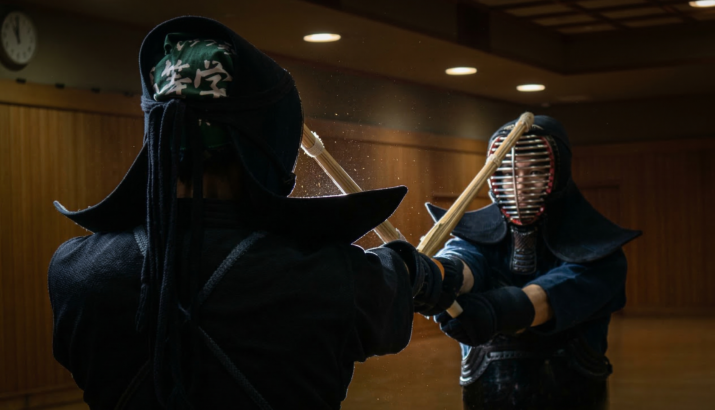
Kendo is a traditional Japanese martial art that developed from the sword training of the samurai and carries elements of bushido philosophy into the present day. Practitioners wear protective armor and use bamboo swords to strike designated target areas while training in the principles and discipline associated with the Japanese sword.
Today, kendo is practiced in Japan and many other countries, and competitions are held at both national and international levels. Practitioners train seriously to improve their skill and sometimes to win matches. However, the deeper purpose of kendo practice is not simply to defeat an opponent.
So what exactly is kendo? To understand this martial art more clearly, it is helpful to look at its equipment, rules, etiquette, purpose, and history.
Equipment
Armor
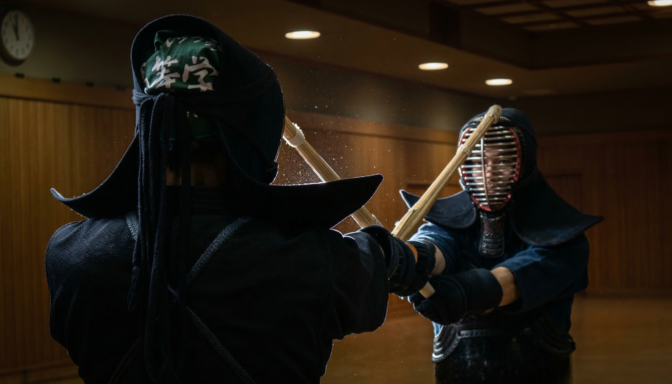
Kendo armor consists of four main pieces. The men protects the head, the kote protect the hands and wrists, the do protects the torso, and the tare protects the lower abdomen and hips. Together these pieces allow practitioners to strike and defend themselves safely during training and matches.
Clothing
Under the armor, practitioners wear traditional training clothing called dogi and hakama. These garments are made from thick fabric and help absorb some of the impact from strikes. They also reflect the traditional appearance of Japanese martial arts practice.
Shinai
The bamboo sword used in kendo is called a shinai. It is designed to allow practitioners to practice powerful strikes with a partner while maintaining a level of safety that would not be possible with a real sword.
Rules
Match Format
Kendo matches are generally fought in a three-point format. Within a time limit, usually around five minutes, the first competitor to score two points wins. If a winner is not decided within the time limit, the competitor who already has one point, or who scores a single deciding point during overtime, wins the match.
Target Areas
There are four target areas where points can be scored: the head, wrists, torso, and throat.
What Makes a Valid Strike
Simply hitting a target is not enough to score a point. A valid strike requires the unity of spirit, sword, and body, known as ki-ken-tai-itchi. In practice, this means striking a valid target with proper form and sufficient strength while demonstrating strong spirit and correct body movement.
The strike must show the kind of power and technique that would be effective if a real sword were used. For this reason, proper posture, timing, and focus are all essential elements of scoring a point.
Fouls and Penalties
Various fouls can occur during a match. For example, stepping out of bounds or dropping the shinai results in a penalty. If a competitor receives two penalties, one point is awarded to the opponent.
Serious disrespect toward referees or an opponent may result in two points being awarded to the opponent, which can lead to an immediate loss.
Etiquette
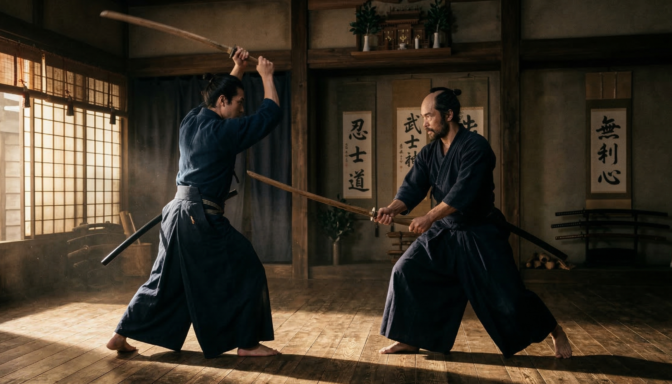
Respect and etiquette are an essential part of kendo practice. Training begins and ends with a bow, showing respect to instructors, training partners, and the dojo.
In kendo, an opponent is not considered an enemy but a partner who helps improve one’s training. Even after an intense match, practitioners bow to each other as a sign of mutual respect.
Purpose
In kendo, practitioners strive to win, but victory itself is not considered the ultimate purpose. Kendo is understood as a path of personal development.
Through training, practitioners aim to cultivate the mind, refine technique, strengthen the body, and grow as individuals. Matches often reveal weaknesses or areas that require improvement, encouraging practitioners to continue training with renewed effort.
At the same time, kendo emphasizes gratitude toward training partners, equipment, and the dojo environment that makes practice possible. In this sense, competition serves as a tool for growth rather than an end in itself.
Is Kendo a Sport?
Kendo can be seen as both a sport and something more. Because practitioners compete, score points, and aim to win matches, it may appear similar to other competitive sports.
However, in kendo the pursuit of victory is generally viewed as a means rather than the ultimate goal. The deeper aim is personal development through discipline, etiquette, and self-control.
For this reason, kendo in Japan is commonly described as budo, meaning a martial way or lifelong path of training, rather than simply a sport.
History
Origins of the Japanese Sword
The history of kendo can be traced back to the development of the Japanese sword. The curved, single-edged katana emerged during the mid-Heian period (794–1185).
During the era of the samurai, swordsmanship training was essential. However, practicing with real swords was extremely dangerous, so wooden swords and later bamboo swords were introduced to allow safer partner training. Protective armor was eventually developed to reduce the risk of injury.
Development During the Edo Period
During the Edo period, bamboo swords and protective armor were further refined and became widely used. This allowed practitioners to train more safely while still practicing realistic techniques, gradually shaping what would later become modern kendo.
The Birth of Modern Kendo
After the samurai class disappeared in the late nineteenth century, many aspects of samurai culture changed. In order to preserve elements of sword training and its associated values, the term “kendo” was officially adopted in 1912.
Later, in 1970, the International Kendo Federation was established and the first World Kendo Championships were held in Tokyo.
Kendo Today
Is Kendo Still Practiced in Japan?
Yes. Kendo is still widely practiced in Japan, particularly in schools, universities, and community clubs. It is also practiced in many countries around the world, and international competitions are held regularly.
Today, it is estimated that around 2.5 million people worldwide have practiced kendo, with the majority of practitioners located in Japan.
The Changing Situation of Kendo
In Japan, the number of practitioners has gradually decreased in recent years. In some places overseas, kendo is sometimes understood mainly as a competitive sport or simply as sword fighting, with less attention given to its deeper cultural and philosophical aspects.
Traditionally, kendo has been more than competition. It is a form of training that emphasizes discipline, respect, and personal development. Many of the most important lessons of kendo are learned through years of practice, repetition, and reflection rather than through individual matches.
For this reason, many practitioners emphasize the importance of sharing not only the techniques of kendo but also the values and spirit connected to the practice.
The Samurai of Today
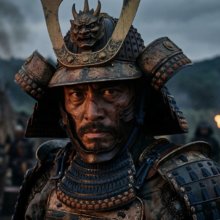
The sword training shaped by the samurai eventually developed into kendo as a way of carrying aspects of bushido into the modern world. The samurai themselves no longer exist, but the martial traditions they practiced continue through disciplines such as kendo.
In this sense, practitioners who pursue both the technical and philosophical aspects of kendo are sometimes described as carrying forward the spirit associated with the samurai tradition.
What Is Bushido?
To understand kendo more deeply, it is also helpful to explore the philosophy of bushido, often translated as “the way of the warrior.” Bushido refers to a set of ideals historically associated with the samurai, including values such as discipline, loyalty, courage, and respect.
These ideas have influenced many aspects of Japanese martial arts and continue to shape how practitioners approach training today.

Comment